
Introduction:
Flexibility is a crucial component of overall fitness, enhancing your range of motion, improving performance, and reducing the risk of injuries. Incorporating regular stretching exercises into your routine can help you maintain muscle elasticity and joint flexibility. Here are six effective stretching exercises designed to boost your flexibility and prevent injuries.
Ravin has helped many on their fitness journey, click here to start yours today
1. Hamstring Stretch
The hamstring stretch targets the muscles at the back of your thighs, helping to improve flexibility in your hips and lower back.
How to Do It:
- Sit on the floor with one leg extended straight and the other leg bent, with the sole of your foot against your inner thigh.
- Reach forward towards your extended foot, keeping your back straight.
- Hold the stretch for 20-30 seconds, then switch legs and repeat.
Benefits:
- Enhances flexibility in the hamstrings and lower back.
- Reduces the risk of lower back pain and hamstring injuries.
2. Cat-Cow Stretch
The Cat-Cow stretch is a gentle, flowing exercise that warms up the spine, relieving tension and improving flexibility in the back and neck.
How to Do It:
- Start on your hands and knees in a tabletop position.
- Inhale as you arch your back (Cow Pose), lifting your head and tailbone towards the ceiling.
- Exhale as you round your spine (Cat Pose), tucking your chin towards your chest and pulling your belly towards your spine.
- Repeat for 10-15 cycles, moving smoothly between the two poses.
Benefits:
- Increases spinal flexibility and mobility.
- Alleviates tension in the back and neck.
3. Hip Flexor Stretch
Stretching the hip flexors is essential for maintaining mobility and preventing lower back pain, especially for those who sit for long periods.
How to Do It:
- Kneel on your right knee with your left foot in front, forming a 90-degree angle with your left knee.
- Push your hips forward slightly, feeling a stretch in the front of your right hip.
- Hold for 20-30 seconds, then switch sides and repeat.
Benefits:
- Improves flexibility in the hip flexors.
- Helps prevent lower back and hip pain.
4. Shoulder Stretch
The shoulder stretch helps to increase flexibility and range of motion in the shoulder joints, which is essential for upper body movements.
How to Do It:
- Bring your right arm across your chest.
- Use your left hand to gently press your right arm closer to your chest.
- Hold the stretch for 20-30 seconds, then switch arms and repeat.
Benefits:
- Enhances shoulder flexibility.
- Reduces the risk of shoulder injuries.
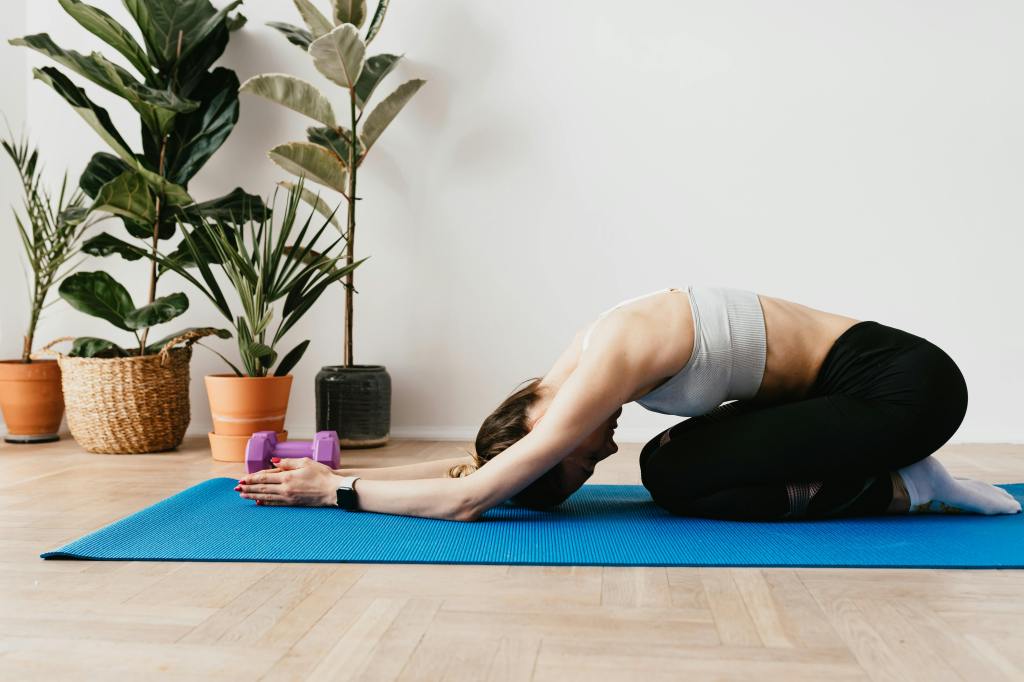
5. Child’s Pose
Child’s Pose is a relaxing stretch that gently stretches the back, hips, and shoulders, promoting flexibility and relaxation.
How to Do It:
- Kneel on the floor with your big toes touching and knees spread apart.
- Sit back on your heels and extend your arms forward, lowering your torso between your thighs.
- Rest your forehead on the ground and hold the stretch for 30-60 seconds.
Benefits:
- Stretches the back, hips, and shoulders.
- Promotes relaxation and reduces stress.
6. Calf Stretch
The calf stretch targets the muscles in the lower leg, improving flexibility and preventing tightness that can lead to injuries.
How to Do It:
- Stand facing a wall with your hands pressed against it.
- Step one foot back, keeping your heel on the ground and your leg straight.
- Bend your front knee and lean towards the wall until you feel a stretch in your back calf.
- Hold for 20-30 seconds, then switch legs and repeat.
Benefits:
- Increases flexibility in the calf muscles.
- Helps prevent calf strains and Achilles tendon injuries.
Ravin has helped many on their fitness journey, click here to start yours today
Why stretching is important
Stretching is an essential component of a well-rounded fitness regimen because it helps prevent injuries in several ways. Here’s an overview of how stretching contributes to injury prevention:
1. Increases Flexibility
Regular stretching increases the flexibility of muscles and tendons. Flexible muscles are less likely to tear when you perform movements that extend beyond your usual range of motion. This increased flexibility helps your body handle the stresses and strains of various physical activities, reducing the risk of muscle strains and joint sprains.
2. Improves Range of Motion
Stretching helps improve the range of motion around your joints. A greater range of motion allows your joints to move freely and fully, reducing the risk of injuries related to joint restrictions or stiffness. When your joints can move through their entire range, the likelihood of sudden, unnatural movements that can cause injuries decreases.
3. Enhances Muscle Coordination
Stretching helps improve neuromuscular coordination, which is the ability of your muscles and nerves to work together effectively. Better coordination means your muscles can react more swiftly and efficiently to changes in movement, balance, and posture. This can prevent falls and other accidents that might lead to injuries.
4. Promotes Blood Flow and Circulation
Engaging in stretching exercises increases blood flow to your muscles. Enhanced circulation delivers more oxygen and nutrients to muscle tissues and removes metabolic waste products more efficiently. This improved blood flow helps muscles recover faster and stay healthier, reducing the risk of overuse injuries and muscle fatigue.
5. Reduces Muscle Tension and Stress
Stretching helps to reduce muscle tension and stress, which can build up from regular physical activity or prolonged periods of inactivity. By releasing this tension, stretching reduces the risk of muscle imbalances and compensatory movements that often lead to injuries.
6. Prepares the Body for Activity
Dynamic stretching, which involves moving parts of your body and gradually increasing reach, speed of movement, or both, helps prepare your muscles for physical activity. By warming up your muscles and increasing your heart rate, dynamic stretching prepares your body for the demands of your workout, making it less prone to injuries.
7. Improves Posture
Regular stretching can correct muscle imbalances and improve your posture. Poor posture, often resulting from tight muscles, can lead to various injuries and chronic pain conditions. By maintaining proper posture through stretching, you can reduce the risk of developing postural-related injuries.
8. Reduces the Risk of Overuse Injuries
Overuse injuries occur when the same muscles or joints are subjected to repetitive stress without adequate recovery. Stretching helps to alleviate tightness and tension in overused muscles, promoting better muscle recovery and reducing the risk of developing overuse injuries like tendonitis or stress fractures.
Conclusion
Stretching is a simple yet highly effective way to enhance your physical fitness and prevent injuries. By improving flexibility, range of motion, muscle coordination, and circulation, stretching prepares your body for physical activity and helps it recover afterward. Incorporating regular stretching into your fitness routine is a proactive approach to maintaining overall health and well-being, allowing you to perform at your best while minimizing the risk of injury.

 Ravin Ron
Leave a comment